Quick answer: Mouse droppings are tiny (1/8 to 1/4 inch) with pointed ends, like dark grains of rice. Norway rat droppings are much larger (1/2 to 3/4 inch) with blunt, capsule-shaped ends, closer to an olive pit.
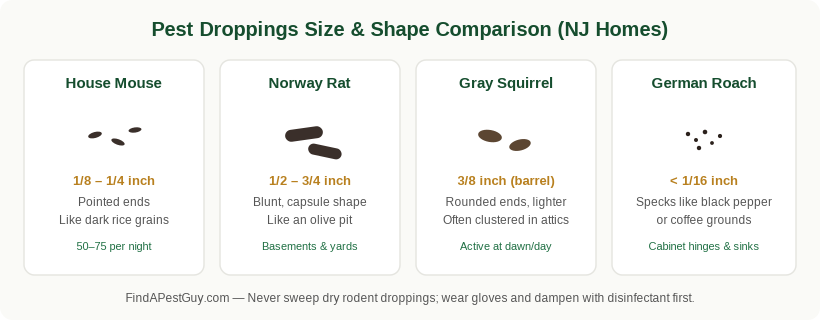
Side-by-side comparison table
| Pest | Length | Shape | Where Usually Found in NJ Homes |
|---|---|---|---|
| House Mouse | 1/8 – 1/4 inch | Pointed ends (rice grain) | Kitchen cabinets, under stove, pantry, basement joists |
| Norway Rat | 1/2 – 3/4 inch | Blunt, capsule-shaped | Basements, garages, near foundation walls & dumpsters |
| Gray Squirrel | 3/8 inch | Plump barrel, lighter brown | Attic insulation, soffit edges, near gable vents |
| German Roach | Under 1/16 inch | Black pepper specks / smears | Cabinet hinges, under sinks, behind refrigerator |
Fresh vs. old droppings: is the infestation active?
Fresh rodent droppings are dark, shiny, and soft. As they age over days or weeks, they turn dull gray, dry, and crumbly. If you want a quick test, safely clean one area and check again 48 hours later — new droppings confirm active movement.
How to clean rodent droppings safely
- Do not sweep or vacuum dry droppings. Sweeping kicks dust and allergens (and in rare cases hantavirus particles) into the air.
- Wear disposable gloves and spray the droppings thoroughly with a bleach-water solution or household disinfectant. Let sit for 5 minutes.
- Wipe up with paper towels, seal in a plastic bag, and wash your hands thoroughly.
Why droppings keep reappearing after DIY traps
A single mouse drops 50 to 75 pellets a night and can squeeze through a 1/4-inch gap around an AC line or utility pipe. Traps catch a few rodents, but until a licensed pro performs rodent exclusion (sealing every exterior entry point with copper mesh and hardware cloth), new ones follow the pheromone trails right back in.
About this service: FindAPestGuy.com is a Verona, NJ-based matching platform. All extermination and exclusion work is performed by independent, NJ DEP-licensed pest control professionals.